Solution Builders team
Jump to a section
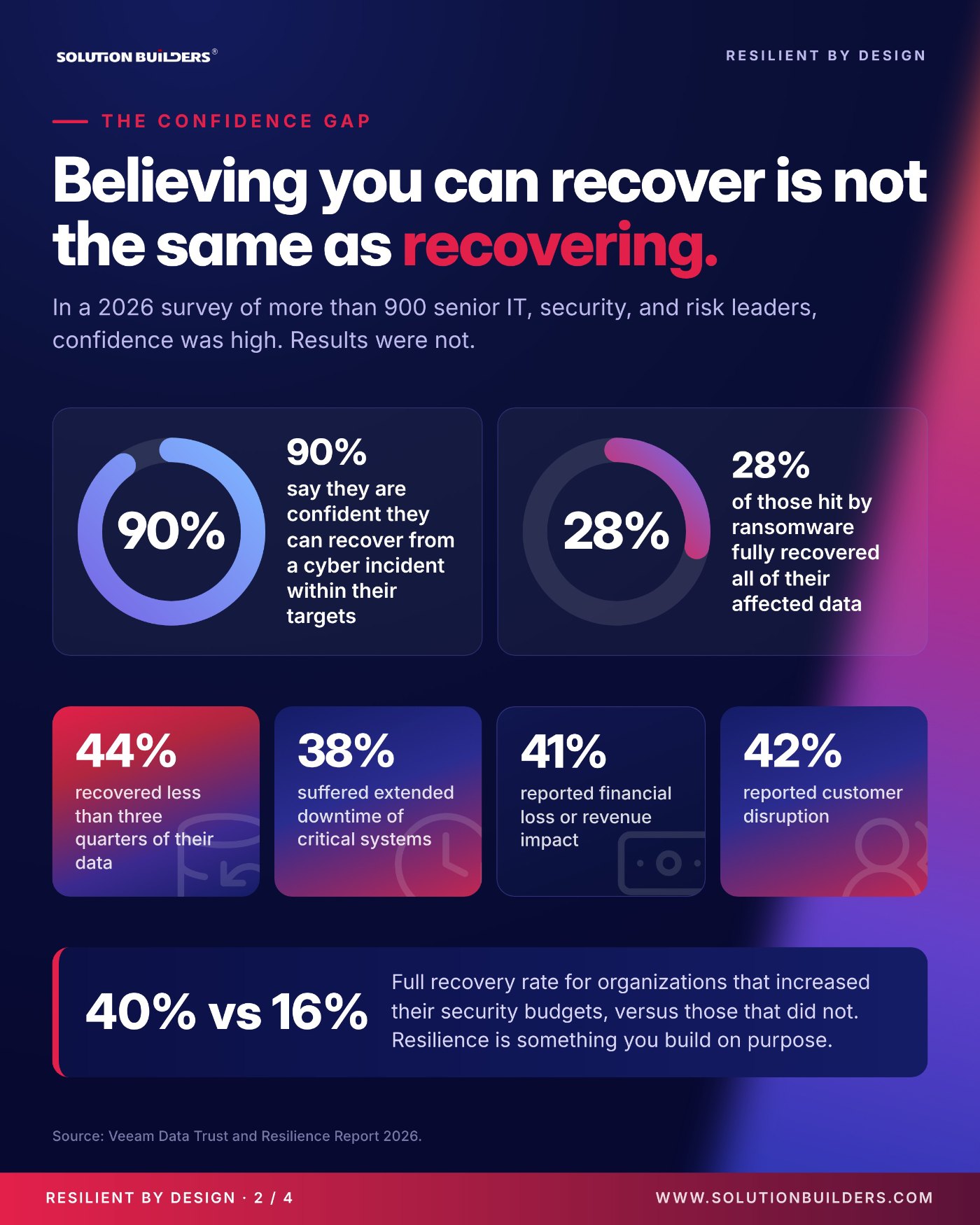
- In the Veeam 2026 report, 90% of leaders were confident they could recover, but only 28% of ransomware victims got every file back.
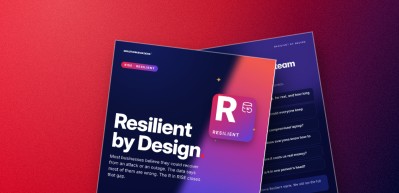
- Resilient is four layers: cloud infrastructure, immutable tested backups, a written continuity plan, and monitoring with failover.
- Immutable backups are the copy ransomware cannot encrypt or delete. Restore from them on a schedule, and time it.
- Six honest questions tell you where to start, and the first "I am not sure" is the layer to fix first.
Data backup services in Minneapolis: believing you can recover is not recovering
Every night at 11 p.m., a backup job at a 70 person company in St. Paul emails the word "success" to an inbox nobody reads. Nobody has restored a full server from it since it was installed. Ask the owner whether the company could survive ransomware and the answer is a confident yes. Ask how long a full restore takes and the room goes quiet. If you are comparing data backup services in Minneapolis, that quiet is the thing to fix.
The Veeam Data Trust and Resilience Report 2026 surveyed more than 900 senior IT, security and risk leaders. 90% said they were confident they could recover from a cyber incident within their targets. Among organizations actually hit by ransomware, only 28% fully recovered their data. On average they got back 72% of it, which sounds survivable until you ask which 28% of your files you could live without. In short: 90% confident, 28% recovered.
The same report found 38% suffered extended downtime of critical systems and 42% reported customer disruption. Organizations that increased security spending fully recovered at 40%, against 16% for those that did not. Resilience is built on purpose. In the RISE framework Solution Builders uses with every client, Resilient is the R, the first layer we build.
What Resilient is actually made of
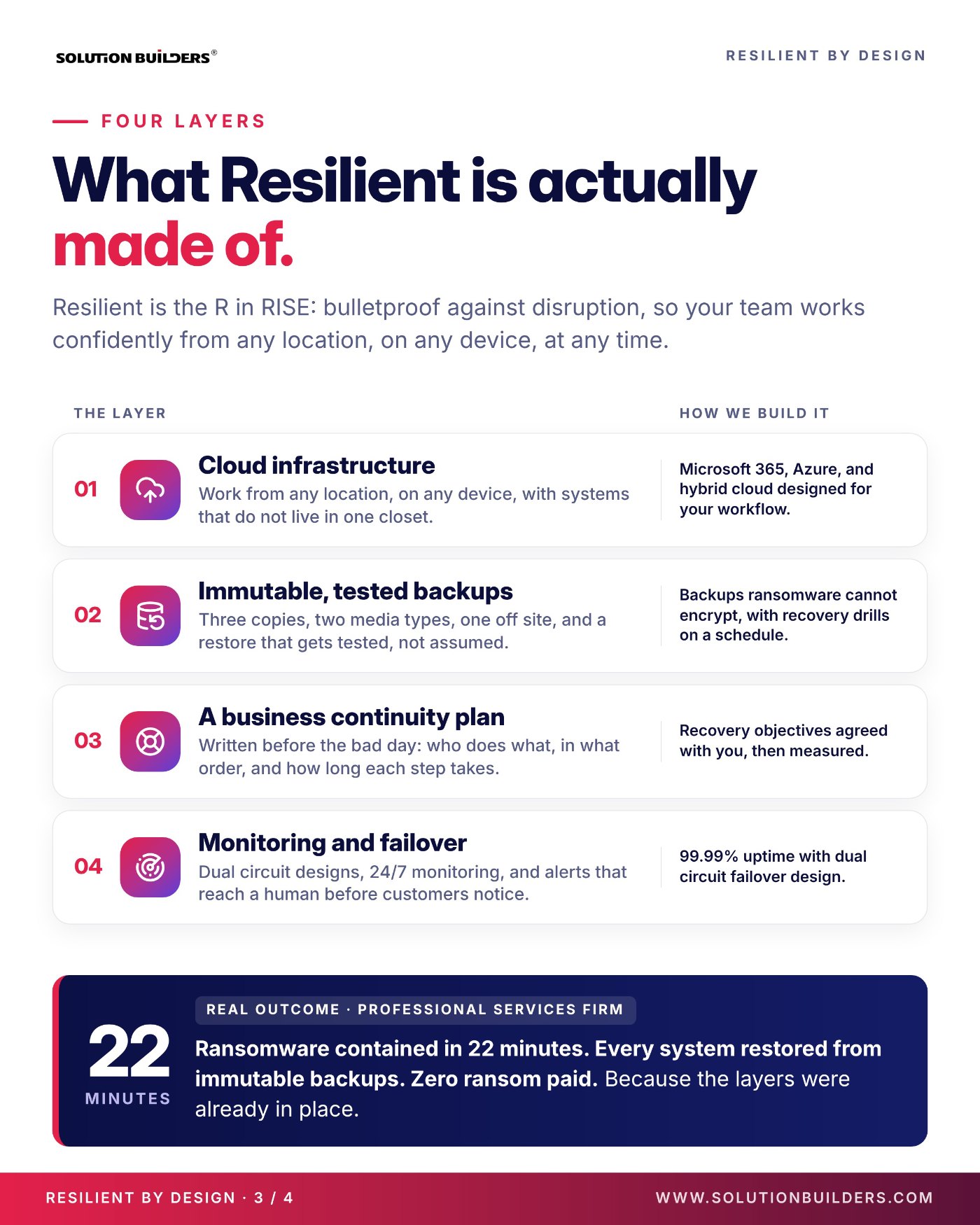
Resilient is not one purchase order. It is four layers that cover for each other. A power outage on the I-494 corridor during an ice storm tests layer one. A phished admin password tests layer two. A missing decision maker at 6 a.m. tests layer three. Layer four is the one that notices before your customers do.
- Cloud infrastructureWork from any location, on any device, with systems that do not live in one closet: Microsoft 365, Azure and hybrid cloud designed around your workflow.
- Immutable, tested backupsThree copies, two media types, one off site, and a restore that gets tested on a schedule rather than assumed. Backups ransomware cannot encrypt.
- A business continuity planWritten before the bad day: who does what, in what order, and how long each step takes. Recovery objectives agreed with you, then measured.
- Monitoring and failoverDual circuit designs, 24/7 monitoring, and alerts that reach a human before customers notice, built for 99.99% uptime.
Layer one is where many companies with 25 to 500 employees get the biggest early return. A 60 user architecture firm with several Twin Cities offices moved to a cloud native setup with Solution Builders, cut infrastructure cost 38%, tripled remote productivity and ended up with zero on premises footprint. Our cloud migration team in Bloomington starts every project with a readiness assessment.
Immutable backups: the copy ransomware cannot touch
An immutable backup is a copy that cannot be changed or deleted for a set period by anyone, including an attacker holding a stolen administrator password. That last part is the point. Sophos reported in its State of Ransomware 2024 research that 94% of organizations hit by ransomware saw attackers try to compromise their backups. A company with no backup pays.
The classic rule still holds: three copies of your data, on two different media, with one off site. Modern practice adds one more: at least one copy immutable, and that includes Microsoft 365, because mailboxes, SharePoint and Teams files are your data and retention settings are not a backup. A backup and disaster recovery service in the Twin Cities should cover servers, cloud workloads and Microsoft 365 in one immutable, off site set, with restore drills on a calendar.
The backup that emails "success"
- Lives on the same network as the servers it protects
- Admin credentials can delete it
- Last full restore: unknown
- Microsoft 365 is "in the cloud, so it is fine"
The backup that recovers
- Immutable, off site copy that nobody can alter
- Servers, cloud workloads and Microsoft 365 covered
- Full restore drilled on a schedule, and timed
- Recovery objectives agreed with the business
This is the layer that turned a bad day into a short one for a 42 user accounting firm in the metro. Ransomware was contained in 22 minutes by our 24/7 security operations center, every system was restored from immutable backups, and the ransom paid was zero. Not luck. The layers were already in place.
Your ransomware recovery plan, written before the bad day
A business continuity plan for a small business does not need to be a binder. It needs to answer four questions on paper, before the day you need it: who makes the call, who does what in what order, how long each system can be down before it costs real money, and how you will talk to each other when email is the thing that is broken. Then it needs a test. A ransomware recovery plan in Minnesota that has never been rehearsed is a theory.
| System (illustrative) | How long can it be down? | What makes that possible |
|---|---|---|
| Email and Teams | Minutes | Microsoft 365 plus an immutable backup of it |
| ERP or line of business app | Hours, agreed with operations | Replicated server, restore drilled and timed |
| File server and SharePoint | Same day | Immutable off site copy, tested quarterly |
| Internet and phones | Minutes | Dual circuit failover, cloud voice on mobile |
The targets above are examples. Yours come from a conversation between IT and the people who run operations. A manufacturer with a plant in Greater Minnesota and an office in the metro will set different numbers for the plant floor system than for the marketing file share. Once the targets exist, test against them: restore one server and one mailbox end to end, time it, and run a 60 minute tabletop exercise with the leadership team. Our cybersecurity team designs detection and recovery together, because an attack caught in minutes is a much smaller restore. For the full method, read The Business Continuity Playbook.
Six questions to ask your team this week
You do not need a consultant to start. You need honest answers to six questions, and ten minutes at your next leadership meeting.
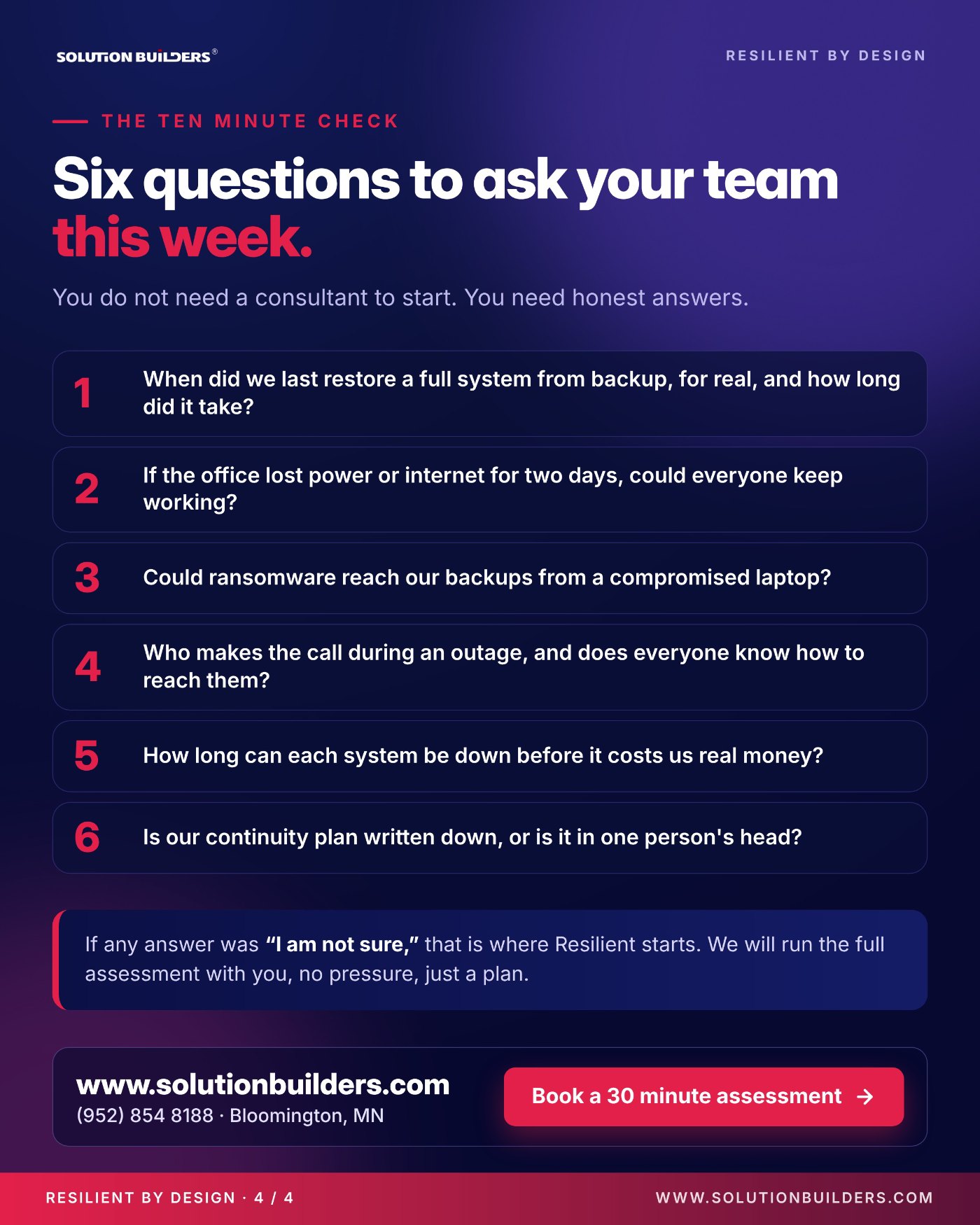
- When did we last restore a full system from backup, for real, and how long did it take?
- If the office lost power or internet for two days, could everyone keep working?
- Could ransomware reach our backups from a compromised laptop?
- Who makes the call during an outage, and does everyone know how to reach them?
- How long can each system be down before it costs us real money?
- Is our continuity plan written down, or is it in one person's head?
If any answer was "I am not sure"
That answer is the layer to fix first, and it is usually backups or the plan. Solution Builders will run the full resilience assessment with you at no cost, from our Bloomington office, and hand you a written plan whether or not you ever work with us.
Companies across Minneapolis, St. Paul and the rest of Minnesota have trusted that nightly "success" email for years. The ones that come through a bad day cleanly stopped trusting it and started testing it.
Backup and business continuity for Twin Cities companies
Solution Builders has kept Minnesota businesses running from Bloomington since 1995, through ice storms, hardware failures and ransomware. Our 50+ engineers and 24/7 security operations center build Resilient first for companies with 25 to 500 employees in Minneapolis, St. Paul and across the state, from manufacturers with a plant up north to firms downtown. Related services: Data Backup and Disaster Recovery, Cloud Migration, Cybersecurity. Contact us or book a 30 minute call.