Solution Builders team
Jump to a section
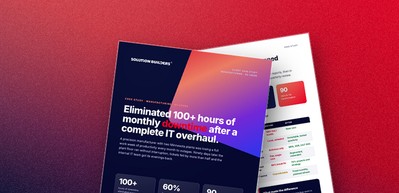
- Two plants on infrastructure built for one, plus one IT generalist stuck in break fix mode, cost the company 100+ hours of downtime a month.
- Monitoring and an immutable backup went in first, so the network and host rebuild could happen on weekends without fear of losing the plant.
- Co-managed IT kept the internal lead as owner of the plant systems while Solution Builders took the help desk, engineering, 24/7 security and projects.
- Ninety days in: zero unplanned production stops, tickets down 60%, and the IT lead spending 70% of his week on projects instead of fires.
Two plants, one generalist, and a network that took the floor down
If you run a plant in the Twin Cities, you know the feeling. The network hiccups, the scheduling system freezes, operators stand around the line, and the one person who understands the servers is already on the phone with someone else. Managed IT services for manufacturers in Minnesota exist because that scene repeats itself every week in plants from Bloomington to Brainerd. This is the story of one of them, an 85 user discrete manufacturer with two plants and one office.
The company had grown from one plant to two on infrastructure built for a much smaller business. Here is where it stood on day one.
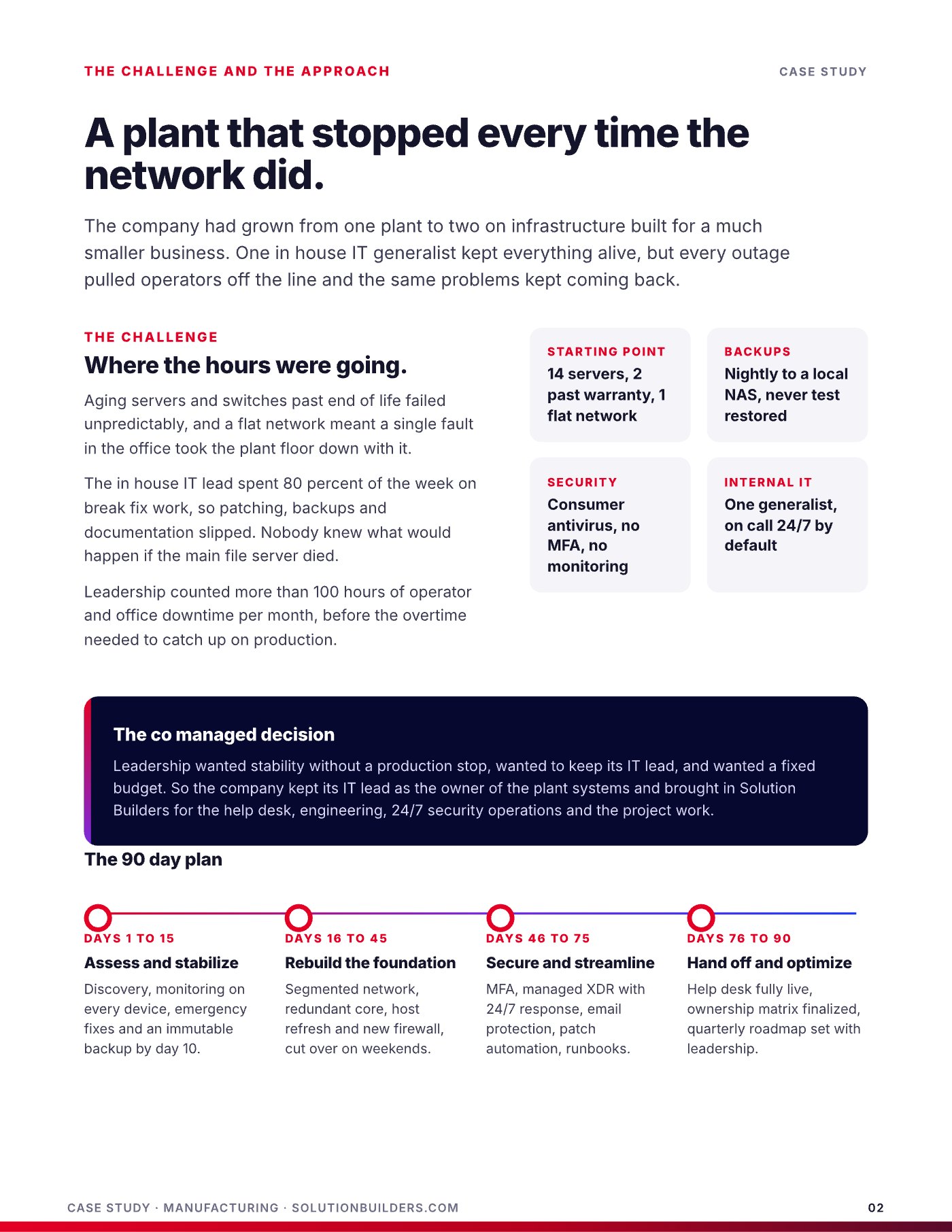
- Infrastructure. 14 servers, two of them past warranty, on one flat network shared by the office and both plant floors.
- Backups. Nightly to a local NAS, never test restored. Nobody knew what would happen if the main file server died.
- Security. Consumer antivirus, no multifactor authentication, no monitoring of any kind.
- Internal IT. One generalist, on call 24/7 by default, with no backup and no documentation.
Where 100+ hours a month were going
Aging servers and switches failed unpredictably, and because the network was flat, a single fault in the office took the plant floor down with it. The in house IT lead spent 80 percent of his week on break fix work, so patching, backups and documentation slipped, which caused more faults, which ate more of his week. Leadership counted more than 100 hours of operator and office downtime per month, before the overtime needed to catch up on production.
The company did not want to fire its IT lead, stop production for a rebuild or sign an open ended consulting engagement. It wanted stability, a fixed budget and someone to share the load. That ruled out a full outsource and pointed at a co-managed model.
Keep the IT lead, add the team behind him
The company kept its IT lead as the owner of the plant systems and brought in Solution Builders for the help desk, engineering, 24/7 security operations and the project work, all on a fixed monthly fee. He stayed in charge. He stopped being alone.
That split is the heart of co-managed IT for manufacturers: the person who knows the plant keeps the plant, and a bench of 50+ engineers covers everything else, including nights and weekends.
What changed: a 90 day IT overhaul with no production stops
The plan was phased so the plant could survive a failure before anything risky happened. Monitoring and an immutable backup went in during the first two weeks. Once the company could lose a server without losing a week, the rebuild could happen on weekends without fear.
- Days 1 to 15: assess and stabilizeDiscovery, monitoring on every device, emergency fixes to the two worst servers, and an immutable backup running by day 10.
- Days 16 to 45: rebuild the foundationSegmented network with the plant floors in their own zones, a redundant core, a host refresh and a new firewall, all cut over on weekends. Office workloads such as email and files moved to Microsoft 365 and Azure as part of the cloud migration, while plant systems stayed on the refreshed local host.
- Days 46 to 75: secure and streamlineMultifactor authentication everywhere, managed XDR with 24/7 response from the Solution Builders security operations center, email protection, patch automation and runbooks for every critical system.
- Days 76 to 90: hand off and optimizeHelp desk fully live for all 85 users, ownership matrix finalized between the IT lead and the Solution Builders team, quarterly roadmap set with leadership.
Not one phase required a production stop. Every cutover happened on a weekend with a tested rollback, which is the only way to rebuild a plant that cannot afford to pause.
Ninety days later, the line stopped stopping
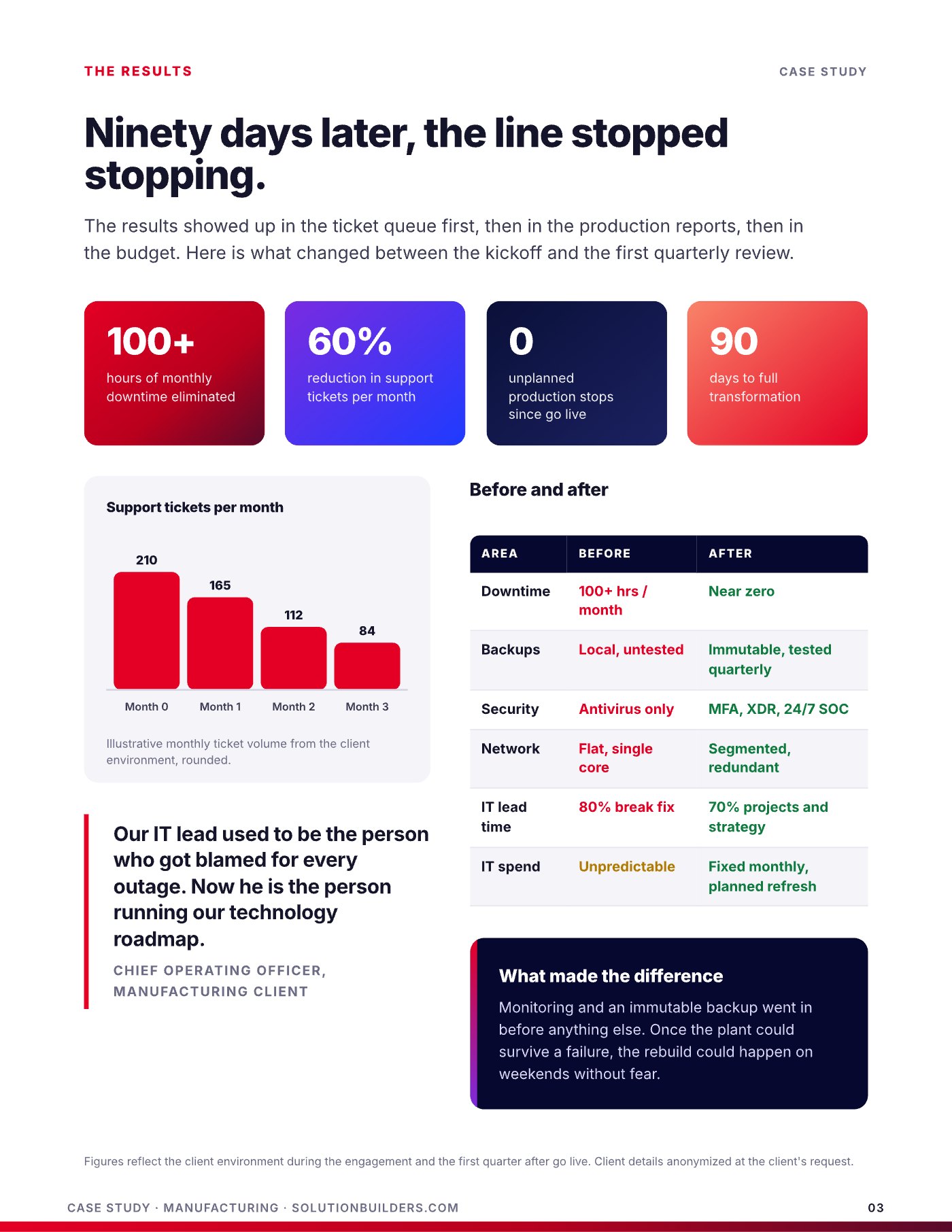
The results showed up in the ticket queue first, then in the production reports, then in the budget. Monthly ticket volume fell from roughly 210 at kickoff to about 84 by month three, and there has not been an unplanned production stop since go live.
| Area | Before | After |
|---|---|---|
| Downtime | 100+ hours a month | Near zero |
| Backups | Local, untested | Immutable, tested quarterly |
| Security | Antivirus only | MFA, XDR, 24/7 SOC |
| Network | Flat, single core | Segmented, redundant |
| IT lead's time | 80% break fix | 70% projects and strategy |
| IT spend | Unpredictable | Fixed monthly, planned refresh |
Our IT lead used to be the person who got blamed for every outage. Now he is the person running our technology roadmap.Chief Operating Officer, Solution Builders manufacturing client
The last row matters as much as the first. An unpredictable IT budget became a fixed monthly fee with a planned refresh cycle, which is what let the CFO stop treating every outage as a surprise expense.
Four lessons for co-managed IT in Twin Cities manufacturing
Every plant is different, but the pattern here repeats across the manufacturers we support along the I-494 corridor and in Greater Minnesota. Four things made the difference.
- Survive first, rebuild second. Monitoring and an immutable backup before any cutover. Once the plant can survive a failure, every other change gets safer and faster.
- Segment the floor. A flat network turns an office fault into a production stop. Plant zones with a redundant core are the single biggest downtime fix.
- Keep the person who knows the plant. Co-managed IT works because the internal lead keeps the systems only he understands, and sheds the help desk and the nights.
- Fix the budget. A fixed monthly fee with a refresh plan lets leadership plan instead of react.
One person, every fire
- Patching and backups slip when tickets spike
- Every outage is a surprise expense
- Nights and weekends depend on one phone
One owner, a whole bench
- Help desk, engineering and 24/7 security covered
- Fixed monthly fee, planned refresh
- The IT lead runs the roadmap
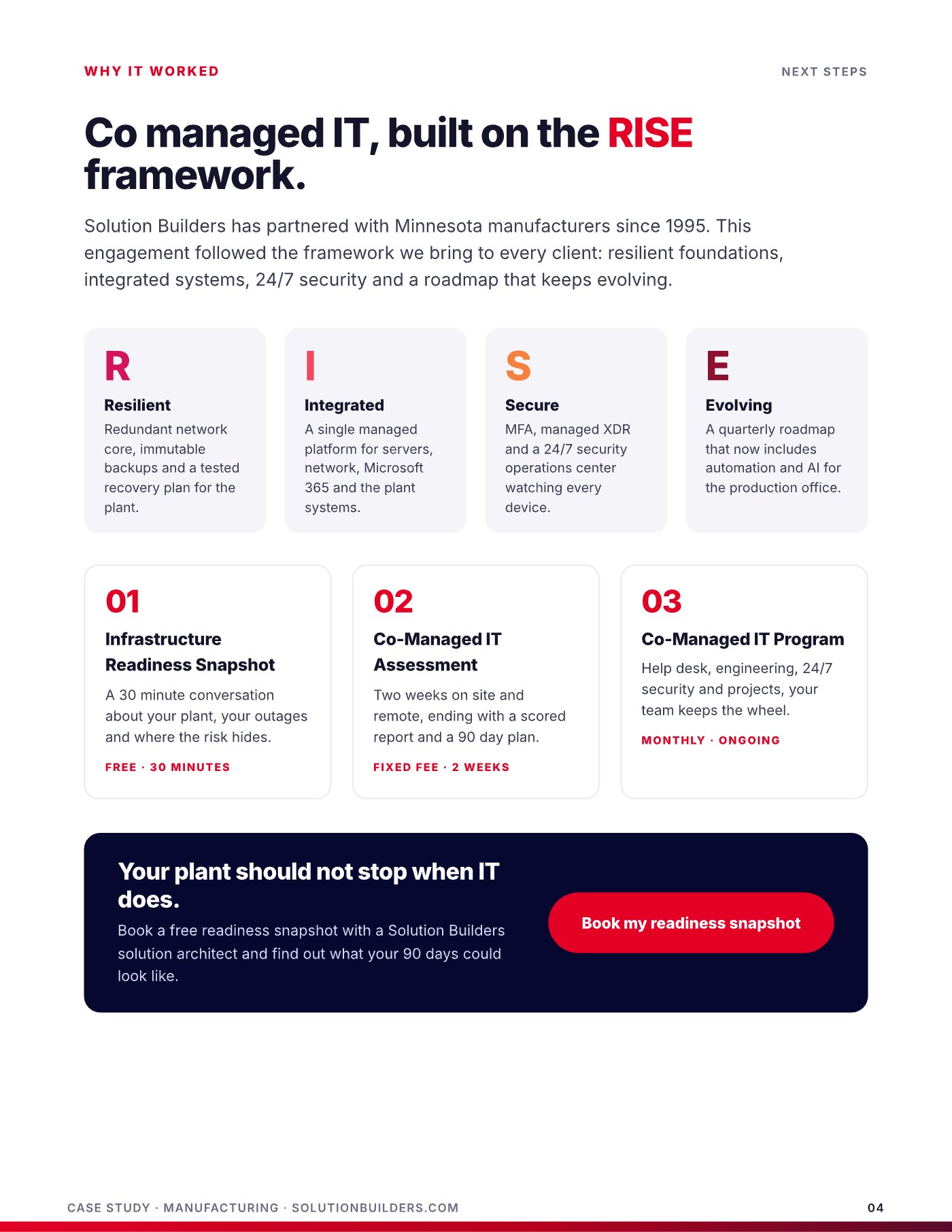
This engagement followed the RISE framework we bring to every client: resilient foundations, integrated systems, 24/7 security and a quarterly roadmap that now includes automation for the production office.
What managed IT services for manufacturers in Minnesota should fix first
You do not need a 90 day plan to start. You need honest answers to five questions, which is exactly where this engagement began.
- Count the downtime. Add up operator and office hours lost to IT in the last month, before overtime.
- Ask what happens if the main file server dies today, and when a restore was last tested.
- Check whether a fault in the office can reach the plant floor. If the network is flat, it can.
- Look at how your IT lead spends the week. Above 50 percent break fix means nothing strategic is getting done.
- Book a free 30 minute Infrastructure Readiness Snapshot with Solution Builders and get a candid read on where the risk hides.
Solution Builders has partnered with Minnesota manufacturers since 1995 from Bloomington, with 50+ engineers, a 24/7 security operations center, a 98% client satisfaction score and month to month terms. Plants with 25 to 500 employees across Minneapolis, St. Paul and Greater Minnesota run on the same model that gave this company its evenings back.
Managed IT for manufacturers across the Twin Cities
Solution Builders supports manufacturers with 25 to 500 employees from Bloomington, including plants along the I-494 corridor, machine shops in the northern suburbs and companies with a plant in Greater Minnesota and an office in the metro. The client in this story is anonymized at its request, and its 90 day plan is the one we bring to every plant. Related services: Co-Managed IT, Cloud Migration, Cybersecurity, Data Backup and Disaster Recovery. Contact us or book a 30 minute call.